
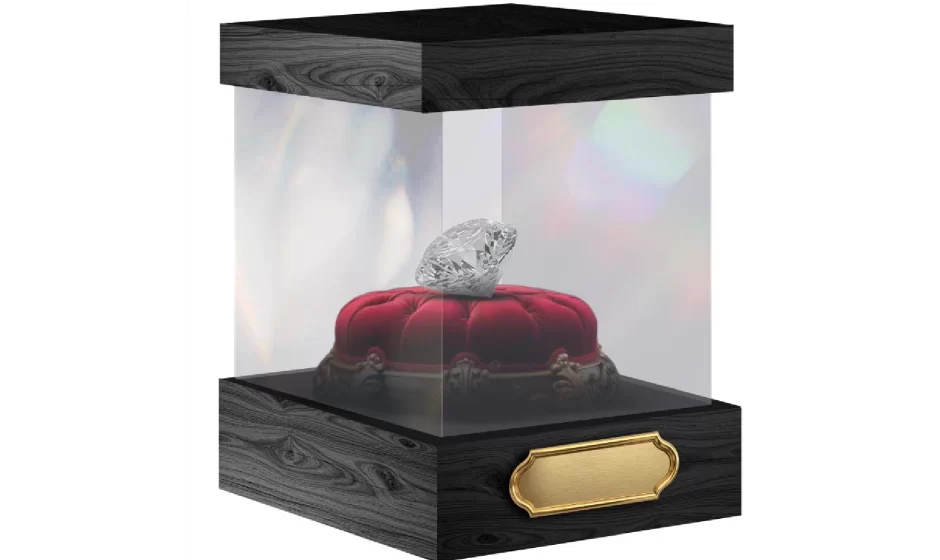

GABORONE – In a high-stakes gathering held at the De Beers offices on Airport Road, industry leaders and government communications stakeholders convened for an intensive forum titled “Telling Botswana’s Diamond Story”. The event, occurring as the nation approaches its Diamond Jubilee, served as both a strategic briefing and a masterclass in reclaiming the narrative of natural diamonds in an era of shifting global perceptions and technological disruption.
The forum arrived at a critical juncture for the industry. While De Beers remains a global powerhouse, the structure of its partnership is undergoing significant evolution. Currently, De Beers Group is owned 85% by Anglo-American and 15% by the Government of Botswana, though a high-profile de-merger process from Anglo-American is currently underway. Participants were briefed on how this transition might affect the future shareholding of the company as new investors look to enter the fray.
The Art of the Friction-Filled Story
Central to the day’s agenda was the realization that “natural diamonds are amazing” is no longer a sufficient message for a modern audience. Presenters argued that the industry must move away from “reams and reams of intense staff” and policy-heavy language, moving instead toward authentic storytelling that embraces “tension” and “friction”.
“Storytelling is theater,” Rebecca Quartey-Papafio noted, explaining that humans intrinsically like a bit of friction—the contrast between luxury and the “rugged” reality of the bush. The forum introduced a new framework for the Botswana diamond narrative: Identity, Tension, and Resolution. This involves defining who the nation is (Identity), acknowledging the challenges of the changing landscape (Tension), and presenting a sustainable future (Resolution).
This shift is a direct response to what was termed “TikTok brain,” referring to a global attention economy where consumers demand shorter, sharper, and more relatable content. “If the goal was to inspire,” a speaker remarked, “then I better not write 65 pages of boring things to tell you”.
Economic Engines and the Value Chain
Beyond the narrative, the event provided a deep dive into the complex “incestuous” but vital relationship between De Beers and Botswana. The backbone of this partnership is Debswana, a 50/50 joint venture that operates mines such as Orapa and Jwaneng. The value chain extends from exploration, now increasingly focused on Angola, to sorting and valuing, which is centralized in Gaborone.
Head of Corporate Communications Tumi Ramsden , detailed the Sightholder model, where 90% of rough diamonds are sold to global entities through ten “sight weeks” held annually in Botswana. This hospitality-heavy sales model ensures that international buyers “feel at home” while contributing to the local economy. Despite the dominance of this model, the industry faces headwinds; 2023 was described as one of the most difficult years on record due to rising inflation and the persistent pressure of Lab-Grown Diamonds (LGD).
The Sustainability Counter-Narrative
A significant portion of the forum was dedicated to debunking the environmental criticisms often leveled by the synthetic diamond industry. Wanetsha Mosinyi, addressed the common American critique that mining “digs holes,” pointing out that diamond mining actually utilizes less than 1% of the 0.01% of the Earth’s surface used for all mining.
Instead, the “Botswana Sustainability Story” centers on nature and provenance. Mosinyi highlighted that De Beers and its partners protect approximately 500,000 species, including critical rhino repopulation efforts in Orapa. Furthermore, the company has set an ambitious goal to be carbon neutral by 2030, with facilities like the Botswana sorting building already operating on 100% solar power.
“Provenance actually now becomes number one,” Mosinyi stated, noting that new Tracer technology allows consumers to scan a diamond and see its exact journey from a mine like Jwaneng to the retail shelf. This transparency is essential to prove that Botswana’s diamonds are “natural, traceable, and ethically sourced,” distinguishing them from stones tied to geopolitical conflict.
Bridging the Local Disconnect
Perhaps the most candid moments of the forum involved the “disconnect” between the diamond industry and the Batswana people. Stakeholders raised concerns that while diamonds have built the nation’s infrastructure, many locals feel like outsiders to the luxury they produce. “My kids cannot enter this building, even when I work here, simply because they are under 18 years old,” Rebecca noted, referring to strict security protocols that can make the industry feel “intimidating” rather than a source of pride.
There was a collective call to “demystify” the diamond. Discussions touched on the need for a cultural shift where Batswana view diamonds not just as expensive wedding rings, but as investment assets comparable to cattle or land. “Do I see a diamond as something I can go and take a mortgage loan and invest in?” Lawrence Seretse asked, suggesting that the local market should be encouraged to own stones as a form of “social capital”.
Ideas for local engagement included gifting diamonds for 21st birthdays or incorporating them into everyday items like medals or pins. The forum concluded with a proposal to form a diverse working group to ensure that the “social capital” of diamonds is felt on the ground, turning every citizen into an ambassador for the stone.
Looking Toward the Jubilee
As the session closed, the message was clear: the next 60 years of Botswana’s diamond story will be defined by trust and authenticity. Whether it is addressing the “self-gifting” Gen Z woman in India or the “tree-hugger” consumer in the US, the industry must lead with emotion backed by hard data.
“We have to be the change we want to see,” Boitumelo urged, noting that if the industry fails to differentiate natural diamonds from synthetics, they risk becoming as common as “cubic zirconia”. By leveraging its unique governance framework and deep-rooted environmental stewardship, Botswana aims to ensure its diamonds remain not just a luxury, but a “premium product” that continues to fund education and national development for generations to come.
The forum ended with an invitation for participants to move to the lounge for further networking, symbolizing the “hospitality” and “human connection” that De Beers hopes will define the next chapter of the Botswana story.