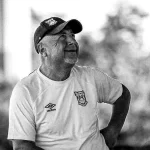


Every political generation produces its own archetype.
Some leaders rise through institutions. Others through wealth, military strength, party machinery, or family legacy. A rare few rise through something far less tangible but often far more powerful: the ability to tell a story that people begin to believe about themselves.
The story of Duma Boko is, in many ways, a story about the power of narrative.
It is the story of a boy from Mahalapye who learned that politics is not merely about acquiring power but about shaping meaning. It is a story about language, memory, identity, sacrifice, and ambition. Above all, it is a story about how words, when carefully chosen and authentically delivered, can become instruments of transformation.
To understand Boko’s political rise, one must begin not in Parliament or at a campaign rally, but in the village.
In Botswana’s traditional worldview, a child does not belong solely to his parents. He belongs to the community. He is nurtured, disciplined, protected, and ultimately shaped by a collective hand. It is a philosophy that places community before individual achievement.
When Boko stood before the nation during his inauguration, he did not present himself as a self-made man. Instead, he referred to himself almost as an observer, speaking of “this boy” who once walked barefoot to school.
It was a subtle but powerful rhetorical choice.
In a political age increasingly dominated by personal brands and individual heroism, Boko redirected ownership of his success back to the people. His victory was not presented as his triumph alone. It became a collective accomplishment. The village had succeeded through him.
That instinct reveals one of the central principles of his political communication. The most effective leaders do not simply ask people to support them. They invite people to see themselves in the story being told.
This ability to transform politics into narrative became even more apparent during moments of national reflection.
At the memorial service of former President Festus Mogae, Boko did not deliver the familiar catalogue of achievements that often characterizes political tributes. Instead, he reached beyond politics into literature.
Borrowing from Joseph Conrad’s Heart of Darkness, he repeated a simple phrase: “Whatever he was, he was not common.”
The phrase resonated because it accomplished several things simultaneously. It elevated Mogae beyond ordinary political assessment. It framed his life within a larger moral and historical context. It transformed a statesman into an enduring symbol.
More importantly, it demonstrated a characteristic feature of Boko’s leadership style. He often seeks to interpret events rather than merely describe them.
Where many politicians communicate in policy language, Boko frequently communicates through ideas. Where others provide answers, he often provides meaning.
This distinction matters.
People rarely remember statistics. They remember stories. They remember metaphors. They remember images.
Boko understands this instinctively.
Perhaps nowhere was this clearer than during one of his most memorable parliamentary exchanges when he responded to accusations of arrogance.
Rather than defend himself directly, he offered a confession.
“I am a dreamer,” he said. “But a dangerous one. I dream with my eyes open.”
The phrase immediately transformed the debate.
Instead of discussing personality, the conversation shifted to purpose. Instead of responding to criticism on its own terms, he elevated the discussion to a broader question about imagination and possibility.
Drawing from T.E. Lawrence’s Seven Pillars of Wisdom, he distinguished between those who dream while asleep and those who dream while awake and act upon those dreams.
The distinction captures much of Boko’s political philosophy.
For him, leadership is not merely about diagnosing problems. It is about envisioning alternatives and creating pathways toward them.
This explains why his speeches frequently move beyond descriptions of national challenges and toward structural questions. He often asks not merely what is wrong, but why the conditions producing those problems continue to exist.
The emphasis is not on complaint but transformation.
Yet perhaps the most overlooked aspect of Boko’s political thinking is his attitude toward disagreement.
Modern politics often rewards certainty. Social media rewards outrage. Political organisations frequently reward loyalty over dissent.
Boko’s public reflections suggest a different view.
In his tribute to Mogae, he celebrated not conformity but contestation. He praised a man who sought understanding rather than validation and who welcomed vigorous debate rather than surrounding himself with praise.
For Boko, democracy is not built through uniform agreement. It grows through friction.
Progress emerges from competing ideas. Better decisions emerge from disagreement honestly pursued. Truth emerges when differing perspectives collide within a framework of mutual respect.
It is a philosophy that treats public discourse not as a threat to stability but as evidence of democratic vitality.
This belief in human complexity also shapes his understanding of leadership sacrifice.
One of the most emotionally resonant moments in his eulogy for Mogae was not directed toward the former president himself. It was directed toward the family.
Boko spoke of sacrifices unseen by the public. He acknowledged the loneliness, the burdens, the tears, and the private costs that often accompany public service.
In doing so, he challenged one of politics’ oldest myths: the myth of the solitary hero.
Great leaders rarely emerge alone.
Behind every public figure stand spouses, children, mentors, friends, colleagues, and communities whose contributions often go unnoticed. By recognizing those sacrifices, Boko humanized leadership and transformed public service from an individual achievement into a shared undertaking.
Yet every successful political story eventually encounters reality.
The transition from opposition leader to head of government demands a different language.
The poetry of campaigns must eventually give way to the pragmatism of governing.
Recent comments regarding Botswana’s diamond industry reveal this evolution.
Faced with economic pressures and structural vulnerabilities, Boko’s language became noticeably more direct. The literary flourishes remained, but they were increasingly accompanied by the language of economic sovereignty, value creation, and strategic control.
His argument was straightforward.
For too long, Botswana has participated primarily in extraction while others captured a disproportionate share of downstream value. The future, he argued, requires moving beyond resource ownership toward value ownership.
The shift illustrates a broader leadership lesson.
Vision inspires people to move. Strategy determines whether they arrive.
No political journey, however, is complete without risk.
History is filled with gifted leaders undone by the very qualities that initially propelled them to greatness. Vision can become arrogance. Confidence can become intolerance. Conviction can become rigidity.
The challenge facing every transformative leader is avoiding the temptation to become larger than the institutions they serve.
The irony is that Boko himself has often warned against precisely this danger. His criticisms of previous administrations frequently centred on the weakening of institutions and the concentration of power around personalities.
The ultimate test of leadership, therefore, is not simply winning power. It is exercising power without becoming captive to it.
That may ultimately determine how history judges his presidency.
In the end, the story of Duma Boko is not merely a political story.
It is a story about imagination.
It is about a leader who understands that people are moved not only by policies but by purpose, not only by plans but by possibility.
His greatest strength may not be his legal training, his political instincts, or even his intellectual depth. It may be his ability to transform ordinary political discourse into a larger conversation about identity, dignity, and national aspiration.
Whether one agrees with him or not, few would deny that he has altered the language of Botswana’s politics.
And perhaps that is the defining lesson of his journey.
Leadership is not simply the management of institutions. It is the interpretation of reality. It is the ability to take the anxieties, hopes, frustrations, and dreams of ordinary people and weave them into a story compelling enough to inspire collective action.
The boy from the dusty plains understood that long before he entered the State House.
Whatever history ultimately says about Duma Boko, one thing is already clear.
Whatever he is, he is also not common, like he said about the late former President Mogae.