
How a Global Sporting Moment Became an Investment in a Nation’s Future: World Athletic Relays
The morning sun catches the glass façade of Stanbic Bank Botswana’s headquarters in Fairgrounds, throwing reflections across a city quietly reinventing itself. Beyond the boardrooms and balance sheets, Gaborone is alive with ambitious young entrepreneurs and the steady rhythm of a country searching for its next economic chapter.
To most, it is simply another growing African capital. To Chief Executive Chose Modise, it is something else entirely. It is a nation in the middle of what Vice President and Minister of Finance Ndaba Gaolatlhe described in the previous edition as a profound “risk surgery” painfully shedding old certainties in order to build new possibilities.
Few leaders have navigated that transition quite like Modise. He has led Stanbic Bank Botswana through one of the country’s most economically uncertain periods, bringing the successful Letsema Strategy to its conclusion while the diamond industry, the very foundation upon which Botswana built one of Africa’s greatest development stories, faced its most significant structural slowdown in decades. Yet amid global uncertainty, Stanbic continued to strengthen its balance sheet, maintained robust profitability and accelerated a remarkable digital transformation, with customer adoption of digital banking rising from 42 percent to 89 percent. Those figures tell a story of institutional resilience, but Modise believes the more important story lies elsewhere.
“Growth becomes meaningful when people experience it in their own lives,” he says.
It is a deceptively simple statement that has come to define Stanbic’s next chapter. As the bank embarks on its new Kgolo Strategy, appropriately named after the Setswana word for “growth”, its purpose extends beyond financing businesses or issuing mortgages. The ambition is larger: to help shape Botswana’s future by investing in the people, industries and moments capable of changing how the country is seen, both by its own citizens and by the world.
No moment captured that ambition more vividly than the May 2026 World Athletics Relays, hosted in Gaborone.
For three extraordinary days, Botswana became the centre of the global athletics universe.
From every corner of the world they came. Olympic champions, world champions, continental record holders and the fastest relay teams on the planet converged on the National Stadium, transforming Gaborone into a stage watched by millions. South Africa’s sprint powerhouse, Kenya’s middle-distance royalty, Jamaica’s sprint tradition, Great Britain’s relay specialists, the United States, Canada, Nigeria, Germany, Japan and dozens more marched beneath their national colours.
Alongside them stood Botswana’s own generation of track sporting heroes, Olympic champions Letsile Tebogo, Bayapo Ndori, Busang Kebinatshipi, Collen Kebinatshipi and the national relay squads that have rewritten the country’s athletics history and inspired a new generation to believe that global excellence can emerge from a nation of barely 2.5 million people.
For Botswana, the event was never simply about medals, it was about image and crafting a new heritage of confidence.
Every drone shot over the city, every television broadcast into millions of homes, every journalist filing stories from Gaborone became part of something much larger than sport. Countries spend billions trying to persuade investors, tourists and international businesses that they are stable, capable and ready for opportunity. Botswana was suddenly able to demonstrate those qualities organically. The world witnessed modern infrastructure, efficient organisation, welcoming hospitality and a confident nation capable of delivering one of athletics’ premier global competitions.
That kind of exposure cannot easily be purchased, it must be earned. Modise and his team at Stanbic understood this long before the opening ceremony.
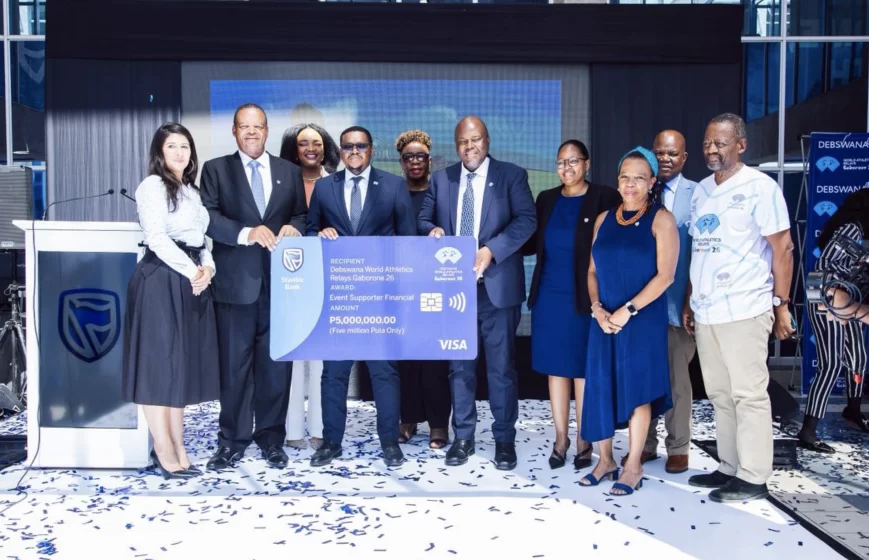
Its decision to stand alongside government, World Athletics, Debswana and other strategic partners was not simply another corporate sponsorship. It was an investment in national confidence. It recognised that major sporting events are increasingly forms of economic diplomacy, vehicles through which countries export not minerals or manufactured goods, but reputation itself.
Every international visitor checking into a local hotel, every taxi transporting athletes between venues, every restaurant serving visiting delegations, every craft market visited by supporters and every small business benefiting from increased foot traffic became part of an economic ecosystem extending well beyond the finish line.
This is what Modise means when he says growth must be experienced.
For the hotel receptionist welcoming guests from Tokyo, and the photographer documenting history. For the food vendor whose busiest weekend of the year came because thousands of visitors arrived in the capital. For young volunteers who suddenly found themselves interacting with Olympic champions they had previously only watched on television. Their participation formed part of Botswana’s export story just as much as any investment conference or diplomatic mission.
Stanbic’s support of Botswana’s sporting ambitions is hardly new.
For years the bank has consistently invested in platforms that develop talent, unite communities and strengthen national identity. Its partnership with the Stanbic Bank Gaborone Golf Club has introduced young people to opportunities that extend far beyond sport, using golf as a pathway for discipline, mentorship and international exposure. Through the Stanbic Music and Lifestyle Festival, it has championed Botswana’s creative economy, recognising culture as an equally important contributor to national development.
Entrepreneurial incubators, youth empowerment initiatives and financial literacy programmes have followed the same philosophy: invest early in potential, and society benefits later.
The World Relays therefore represented not a departure from Stanbic’s strategy, but its natural evolution.
The bank was not simply sponsoring athletes, it was investing in Botswana’s story.
It was backing the belief that when Letsile Tebogo explodes from the final bend ahead of the world’s fastest sprinters, when Collen Kebinatshipi anchors another memorable relay and a 400m dash, when thousands of international visitors leave Botswana surprised by what they discovered, the country’s brand appreciates in value. Confidence and curiosity grows, and thats when investment conversations begin.
The economic return of sport is rarely confined to ticket sales or hotel occupancy. Its greatest dividend lies in perception.
Countries compete not only for capital but for attention. Those capable of projecting competence, stability, excellence and ambition often find themselves attracting opportunities long after the closing ceremony has ended. Botswana’s successful hosting of the World Athletics Relays demonstrated exactly that. For Stanbic, this is where banking meets nation-building.
The bank’s purpos, ”Botswana is our home, we drive her growth” finds its fullest expression not inside a branch, but in moments where national confidence expands. Financing entrepreneurs, supporting SMEs, investing in digital innovation and standing behind global sporting events all become connected chapters of the same story.
Because ultimately, nations grow in much the same way people do, someone must believe in them before the rest of the world does.